HALF ALIVE by LORQAI — Ilse seated beside a cello in a warm music room
LORQAI Illustrated Stories

HALF ALIVE

One Crooked Note

An original song and a five-chapter illustrated short story

Read the story ↓
A story about the things we cannot measure

Ilse tunes pianos for a living. She can make almost any note correct. She just can't remember the last time one meant anything.

HALF ALIVE is an original fictional illustrated short story about perfectionism, emotional numbness, disconnection, and the quiet courage of allowing an imperfect moment to exist. Written alongside the LORQAI song of the same name, it can also be read entirely on its own.

Chapter 01 / 05

Everything in Its Place

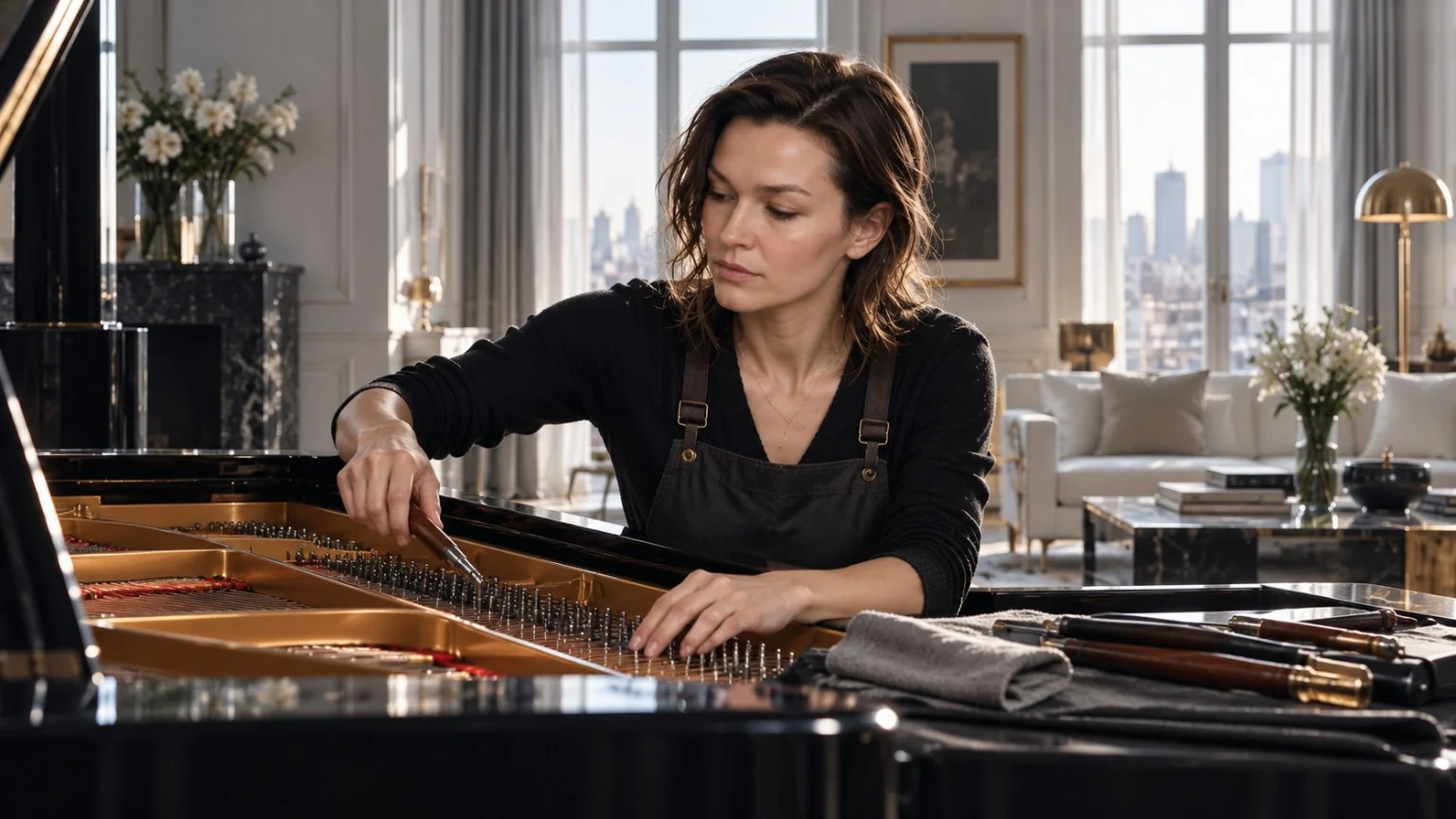
Ilse carefully tuning a grand piano in a bright immaculate apartment

Ilse tuned pianos for a living. She could hear when a string was barely out of place, when a note arrived a fraction too sharp, when a beautiful instrument was trying to hide a flaw.

On Tuesday morning, she stood over a grand piano in an apartment so white and quiet that her footsteps sounded impolite. The owner had left her alone with the instrument and a glass of water she would not touch.

She worked from the middle outward. Each note received her attention, each adjustment a measured turn. There was a satisfaction to getting things right, or at least there used to be. Now she finished a job and felt only that it was finished.

At seven she had woken. At eight she had left. She had answered two emails, remembered her keys, and taken the correct train. Everything exactly where it should be. Including her.

The final chord rang clear through the room. Ilse waited for something to follow it. Nothing did. She packed her tools, straightened the cloth on the piano lid, and went to her next appointment.

Chapter 02 / 05

The Space Between the Notes

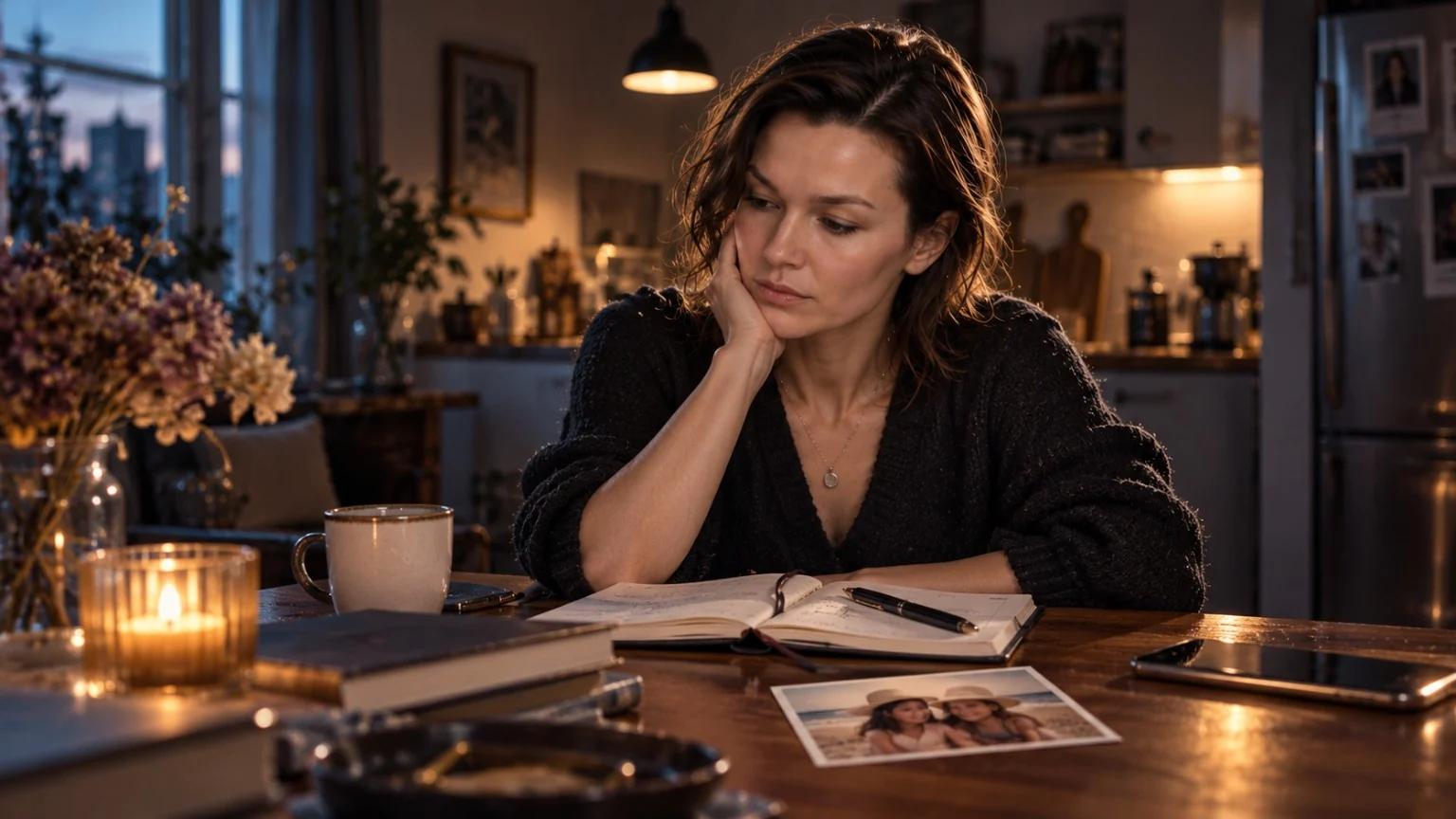
Ilse sitting alone at a kitchen table with a notebook and photograph of her sister

The days had become remarkably easy to organise. It was the hours inside them that Ilse could no longer explain.

She made lists. Groceries. Invoices. Appointments. She crossed off each item with a neat line, as though a completed page could prove that a day had been lived. Her phone held messages from friends she liked and missed, although she could not remember the last time she had wanted to answer.

At home, she heated soup, forgot it, and heated it again. A cup of tea cooled beside an open notebook. In a photograph on the table, she and her sister laughed on a windy beach, both of them squinting into the sun. Ilse remembered the wind. She remembered the sand in her shoes. The laughter felt like a story somebody had told her.

People asked how she was. “Fine,” she said. “Just tired.” She did not think she was lying. She had no better word.

That evening she sat in the kitchen until the light changed. She was not waiting for anything in particular. She simply could not think of what came next.

Chapter 03 / 05

One Crooked Note

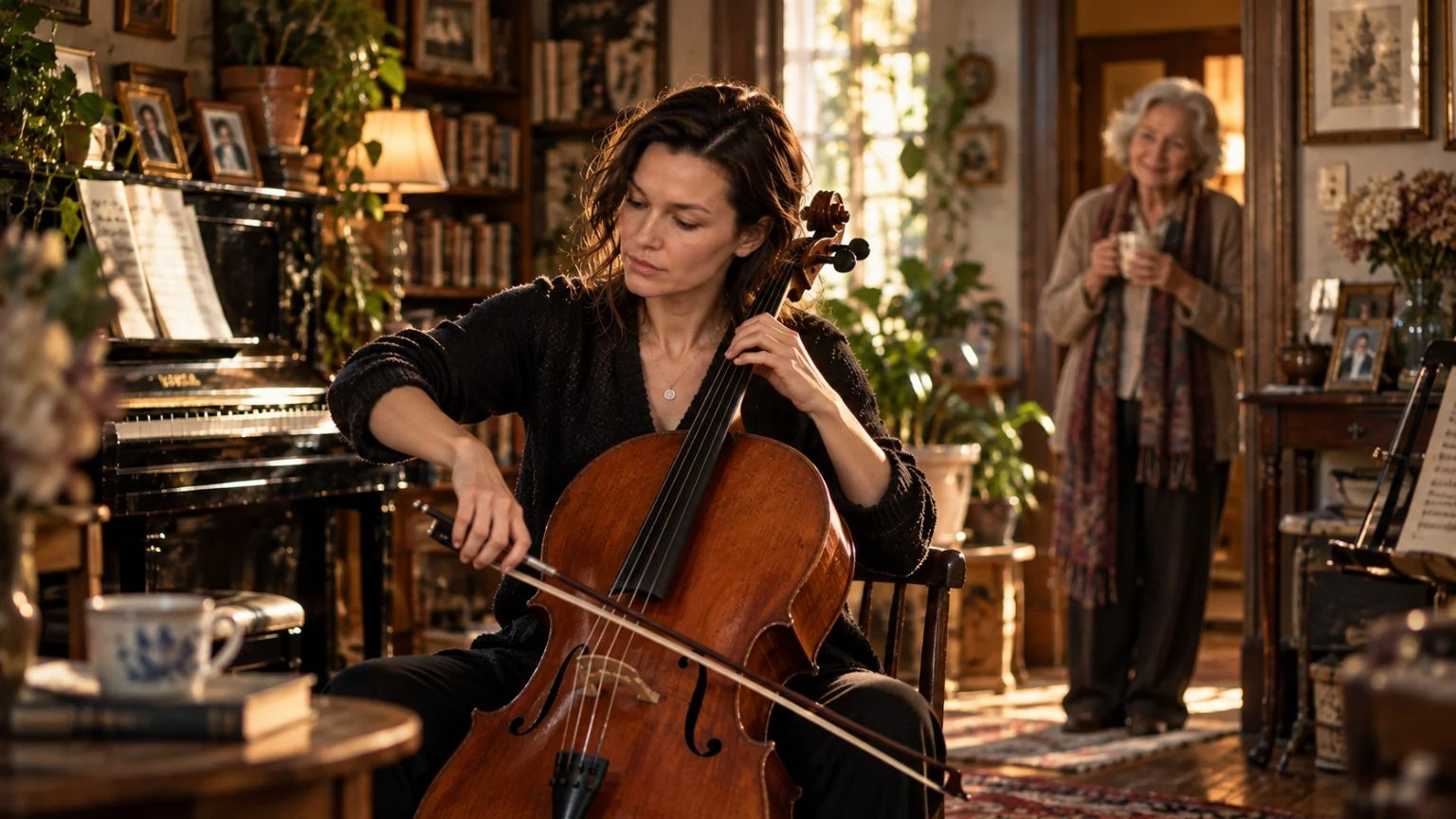
Ilse playing an old cello in Ruth’s welcoming music room while Ruth watches

The old house belonged to Ruth, a retired music teacher whose rooms were full of books, plants, and photographs that leaned at different angles. Ruth had called about a piano that had not been tuned in years.

“It has a mind of its own,” Ruth said fondly. “I hope you won’t take that personally.”

Ilse found the piano beside a tall window. Its keys were worn, its sound uneven. She set to work. From the corner of the room, an old cello rested in its stand. The varnish had faded where a player’s hand once held it.

“Do you play?” Ruth asked when she noticed Ilse looking.

“Not anymore.”

“That wasn’t the question.”

Ilse almost smiled. Later, with the piano finished, she lifted the cello and drew the bow across a string. The sound was rougher than she remembered. Her fingers reached for a cleaner position. Then she stopped.

The next note was crooked. Not beautiful. Not terrible. Just unmistakably there. Ruth said nothing. Ilse let the sound finish before she tried another. For once, she did not rush to correct what she heard.

Chapter 04 / 05

Outside the Lines

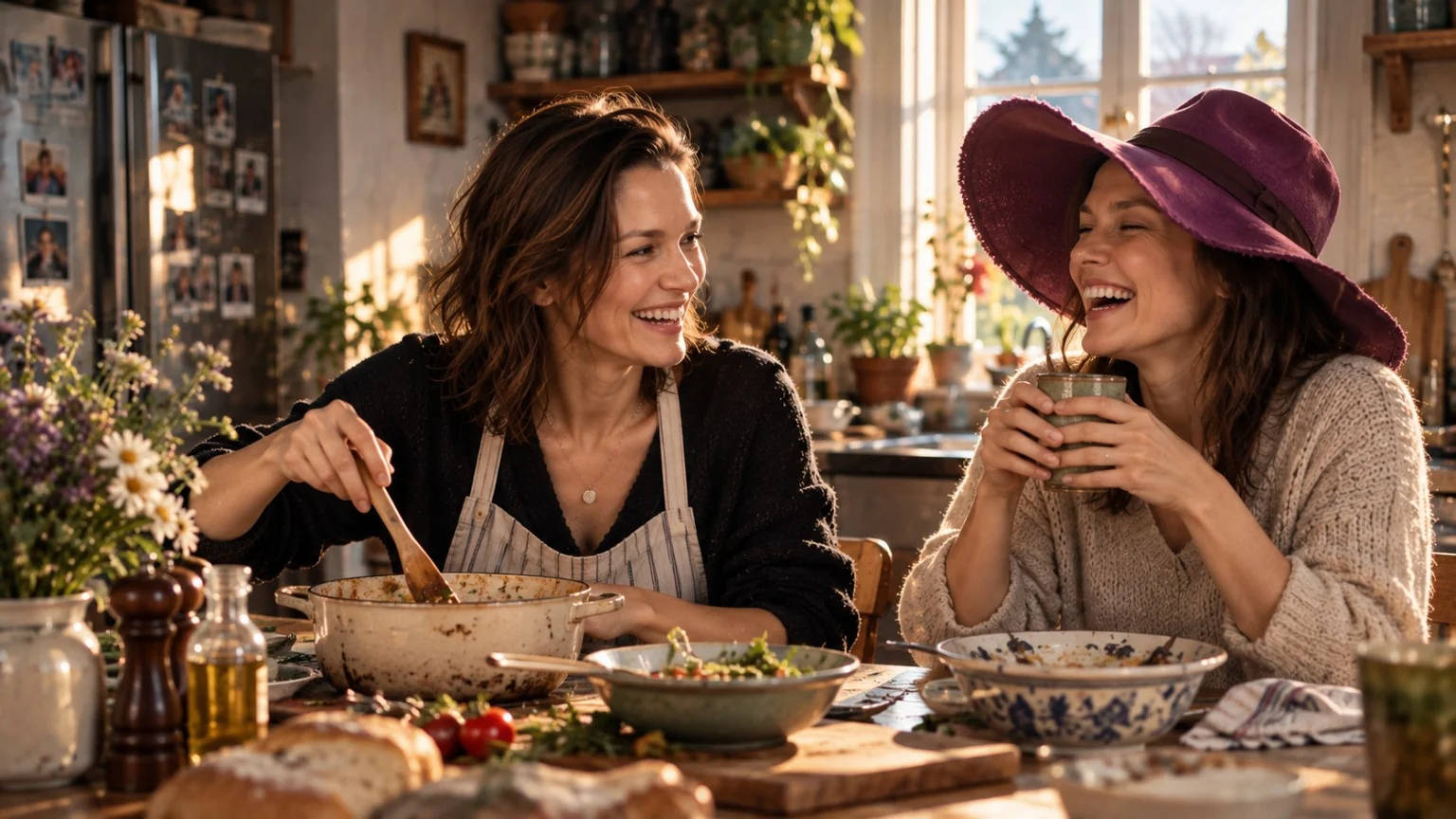
Ilse laughing with her sister wearing a purple hat over a casual kitchen lunch

Two days later, Ilse visited her sister. She had almost cancelled. Instead she arrived with a bag of vegetables and no explanation for why she had brought so many carrots.

Her sister wore an enormous purple hat she had found at a charity shop. “I’m testing whether this is my personality now,” she announced.

They made lunch badly. The soup was too thick, the bread nearly burned, and a spoon fell behind the stove. Ilse laughed once, surprised by the sound. Then the laughter stopped, and she found herself staring at her hands.

“I haven’t felt much in months,” she said.

Her sister set down her cup. She did not say that everything would be fine. She did not offer a motivational speech. “That sounds lonely,” she said. “I’m glad you told me.”

They sat together. Later, Ilse said she thought she should talk to a doctor. Her sister offered to help her find an appointment, and Ilse accepted. It was an ordinary, practical decision. It did not transform the afternoon.

Before she left, her sister put the ridiculous hat on her head. “You can borrow this if you need to look less organised.” Ilse kept it on until the front door.

Chapter 05 / 05

Let It Happen

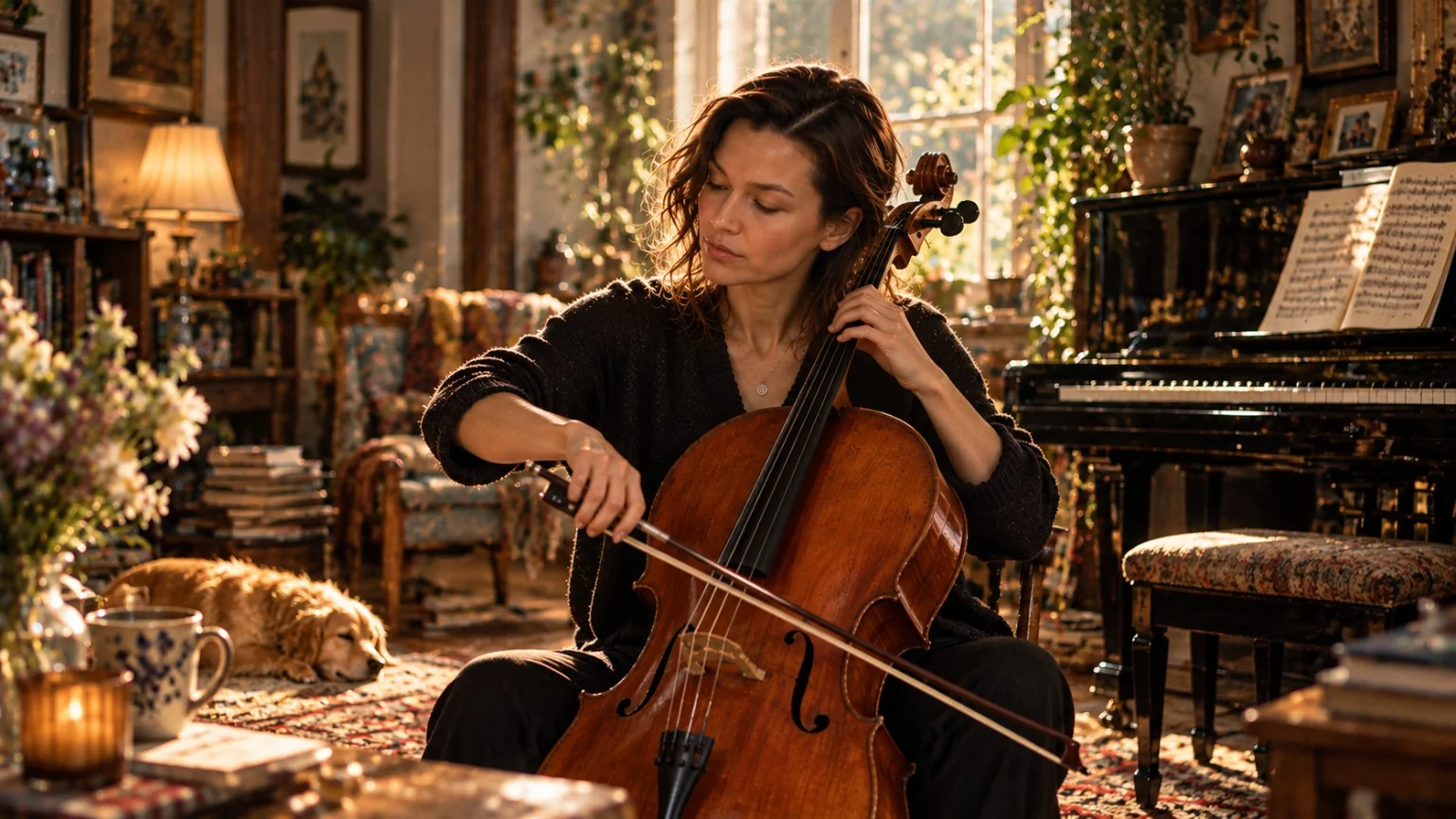
Ilse playing cello in Ruth’s sunlit living room beside a sleeping dog

The following week, Ilse returned to Ruth’s house. The piano was still in tune. A dog slept in a square of sunlight on the rug, and someone had left a book open on the chair.

“Would you like to play?” Ruth asked, pointing toward the cello.

Ilse sat down. She did not have a piece prepared. She played a few notes she remembered, then lost her place. The bow scraped. Her timing wandered. A phrase ended before it was ready.

She felt no sudden certainty. There was no perfect ending, no moment in which the difficult months disappeared. She had made the appointment. She had spoken to her sister. Tomorrow would still require getting out of bed and answering messages.

But the room was warm, and Ruth was listening, and the dog did not seem to mind the mistakes. Ilse played the phrase again without trying to make it flawless.

One crooked note stayed in the air a little longer than the others.

She let it happen.

What Does It Mean to Feel Half Alive?

Some stories about emotional numbness begin with a dramatic loss. Ilse’s begins with a working calendar, a carefully packed tool bag, and a life that appears to be functioning perfectly. The distance between what others see and what she feels is the quiet centre of this story.

Her work as a piano tuner gives that distance a sound. She knows how to correct a note, but she cannot solve every part of living by adjusting it until it fits. The crooked cello note is not a cure or a diagnosis. It is simply a moment she allows herself to hear.

Perfectionism, Control, and One Crooked Note

The song HALF ALIVE moves between precise routines and the unexpected sound that interrupts them. A female lead vocal and expressive cello bring the idea into music: not every note needs to resolve exactly where it was expected.

“One crooked note. Don’t fix it.” is an artistic invitation to accept imperfection, not an instruction to avoid asking for help. In the story, Ilse reaches out to her sister and arranges professional support. Acceptance and care can exist together.

An Illustrated Story of Emotional Disconnection

Across five images, the spaces around Ilse slowly change. The pristine piano room gives way to an ordinary kitchen, an old cello, a shared meal, and finally a room where nothing is perfectly arranged. The illustrations are part of the storytelling, not a substitute for it.

If you came looking for a short story about feeling disconnected, being afraid to make mistakes, or learning to let go of control, this one is meant to leave room for your own interpretation. It does not promise that a difficult feeling will disappear by the last page.

A note to readers: This is fiction and artistic expression, not medical advice or therapy. If emotional numbness or low mood resembles your own experience, a healthcare professional or someone you trust can help you find support.

Listen to the original song

HALF ALIVE — LORQAI

Female vocal, expressive cello, and a melody about the unexpected note that changes the pattern. Read the story, then hear its companion song.

Explore more original LORQAI songs and illustrated stories.

↑ Back to Top